BMW 8647316-01 Converter Inverter Hybrid Electric I3 6144
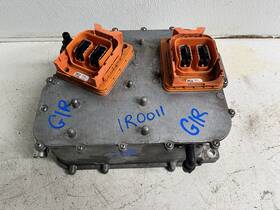
( Brand: Bmw ), ( Manufacturer Part Number: 8647316-01 ), ( Part Type: Converter Inverter ), ( Features: Hybrid Electric ), ( Country Of Origin: United States )
Review BMW I3 Converter Inverter Ah Hybrid Electric Oem
The **BMW 8647316-01 (2014 i3 Converter/Inverter Hybrid Electric Module)** is a critical high-performance power electronics component designed exclusively for BMW s pioneering **i3 electric vehicle**, serving as the backbone of its hybrid-electric propulsion system. This sophisticated assembly integrates a **DC-DC converter** and a **three-phase inverter** into a single, compact unit, enabling seamless energy transfer between the vehicle s high-voltage lithium-ion battery pack and the electric motor while optimizing efficiency and performance. Engineered to meet BMW s stringent engineering standards, this module operates within a robust temperature range, ensuring reliable functionality in both urban driving conditions and extended highway use. The converter regulates and steps down the battery s high-voltage DC power (typically 360 430 volts) to a lower voltage suitable for auxiliary systems, while the inverter converts this DC power back into three-phase AC current to drive the i3 s high-torque electric motor with precision timing and minimal energy loss. Constructed with high-grade materials, including reinforced insulation and heat-resistant components, this module is designed for durability, with a sealed housing that protects against environmental contaminants while maintaining thermal efficiency through advanced cooling systems. Compatible exclusively with the **2014 BMW i3 (6144 series)**, this part is essential for maintaining the vehicle s hybrid functionality, ensuring smooth acceleration, regenerative braking, and overall electric drivetrain performance. Whether used for original equipment replacement or performance upgrades, this converter-inverter module exemplifies BMW s commitment to cutting-edge electric vehicle technology, delivering both reliability and high efficiency in a compact, integrated solution.
### **Analysis of BMW i3 Converter/Inverter (Part Number 8647316-01, 2014 Model, Hybrid Electric 6144)**
#### **Overview**
The **BMW i3 Converter/Inverter (8647316-01)** is a critical component in the **BMW i3 s hybrid system**, responsible for converting DC power from the battery into AC power for the electric motor and vice versa. This part is essential for the vehicle s electric propulsion and regenerative braking functionality. The **2014 model** (with the **6144** powertrain designation) was one of the early iterations of the i3 s hybrid system, which relied on a **lithium-ion battery pack** and a **permanent magnet synchronous motor**.
---
### **Pros of Buying a Used/Replacement BMW i3 Converter/Inverter (8647316-01)**
1. **Essential for Hybrid Functionality**
- Without a functional converter/inverter, the **i3 s electric motor cannot operate**, rendering the vehicle **non-functional as an EV or hybrid**.
- A failing inverter will prevent **regenerative braking**, **electric-only driving**, and **hybrid mode activation**, severely limiting the car s usability.
2. **OEM Quality & Reliability (When New/Well-Maintained)**
- BMW s early i3 inverters were **high-quality components** designed for durability, though they were not immune to wear.
- If sourced from a **reputable dealer or BMW-approved supplier**, a genuine part ensures **proper fitment and performance**.
3. **Compatibility with 2014 i3 (6144 Powertrain)**
- This specific part number is **directly compatible** with the **2014 BMW i3 (6144)** hybrid model, ensuring no modification or adaptation is required.
- Avoids the need for **aftermarket or non-OEM parts**, which may lack long-term reliability.
4. **Supports Battery Health & Longevity**
- A properly functioning inverter **prevents overcharging, voltage spikes, and inefficient power conversion**, which can **damage the battery pack** over time.
- Ensures the **battery operates within optimal parameters**, extending its lifespan.
5. **Aftermarket & DIY Repairability**
- While complex, the inverter is **repairable by skilled technicians** (e.g., replacing MOSFETs, capacitors, or cooling components).
- Some **aftermarket inverters** exist, but they may lack **BMW s precision engineering** and **warranty support**.
6. **Potential for Cost Savings (Used Market)**
- Purchasing a **used or refurbished inverter** (from a trusted source) can be **significantly cheaper** than a new OEM part.
- However, **risk of failure or hidden damage** increases with used parts.
---
### **Cons of Buying a Used/Replacement BMW i3 Converter/Inverter (8647316-01)**
1. **High Cost (New OEM Part)**
- A **new OEM BMW i3 inverter** (8647316-01) typically costs **$1,500 $2,500 **, depending on the supplier.
- This is a **major expense** for a single component, especially when considering **labor costs** for installation.
2. **Complexity & Installation Difficulty**
- The inverter is **not a plug-and-play replacement** it requires **disconnecting the battery, removing the motor housing, and careful wiring**.
- **Specialized tools and electrical knowledge** are needed, making DIY installation **risky** for inexperienced mechanics.
- **Professional installation** (at a BMW dealership or specialized EV shop) can add **$500 $1,500 ** in labor.
3. **Potential for Early Failure (In Older i3s)**
- The **2014 i3 s inverter was prone to overheating** due to **thermal management issues** in early models.
- **MOSFET failures, capacitor degradation, and cooling system malfunctions** were common in the first few years.
- If the inverter has **high mileage or was not properly maintained**, it may **fail prematurely** even after replacement.
4. **Limited Aftermarket Support**
- Unlike **Tesla or Nissan Leaf**, the **BMW i3 has a smaller aftermarket**, meaning **fewer diagnostic tools, repair guides, or compatible parts**.
- **Non-OEM inverters** may exist but **lack BMW s precision calibration**, potentially causing **driving issues or reduced efficiency**.
5. **Battery Compatibility Concerns**
- If the **battery pack is degraded**, replacing just the inverter **won t fully restore performance**.
- A **failing inverter can accelerate battery wear** if it causes **voltage fluctuations or overheating**.
6. **Warranty & Recalls**
- **New OEM parts** may come with a **limited warranty**, but **used parts have no warranty**.
- Some **early i3 models had recalls** related to **thermal management and inverter cooling** checking for **open recalls** is crucial.
7. **Long Repair Downtime**
- Replacing the inverter is a **multi-hour job**, meaning the car will be **unusable** during installation.
- If the **battery or motor is also failing**, the repair timeline and cost **increase significantly**.
---
### **Key Considerations Before Purchasing**
1. **Diagnose the Root Cause**
- Before buying a replacement, **confirm the inverter is the issue** (not the battery, motor, or wiring).
- Symptoms of a failing inverter:- **No power to the motor** (car won t start in EV mode).
- **Check Engine Light (CEL) with P0607 (Inverter Control Module) or P0608 (Inverter Efficiency) codes**.
- **Overheating** (smell of burning electronics, visible damage).
- **Erratic acceleration or loss of regenerative braking**.
2. **Source the Part Carefully**
- **New OEM:** Best for **long-term reliability**, but expensive.
- **Refurbished OEM:** Cheaper, but **risk of hidden damage** only buy from **trusted BMW parts suppliers**.
- **Aftermarket:** Risky **avoid unless absolutely necessary** (e.g., for a project car).
- **eBay, Facebook Marketplace, or i3 forums:** Can find **used parts**, but **test functionality** if possible.
3. **Check for Thermal & Cooling Issues**
- The **2014 i3 s inverter had cooling problems** ensure the **coolant system, radiator, and thermal pads** are intact.
- A **new cooling system upgrade** may be needed alongside the inverter replacement.
4. **Budget for Additional Repairs**
- If the inverter fails, the **battery or motor may also be degraded** budget for a **full hybrid system inspection**.
- Consider whether **repairing is worth it** vs. **buying a used i3 with a known working inverter**.
5. **Labor vs. DIY**
- **Professional installation** is **highly recommended** due to the **complexity of EV wiring and calibration**.
- If attempting DIY, **research thoroughly** and **consult i3 forums** for step-by-step guides.
---
### **Final Recommendation**
#### **Best Choice: New OEM Inverter (If Budget Allows)**
- **Pros:** Guaranteed compatibility, reliability, and warranty.
- **Cons:** Expensive ( $1,500 $2,500).
- **Best for:** Owners who **prioritize long-term reliability** and can afford the cost.
#### **Alternative: Refurbished OEM Inverter (From Trusted Source)**
- **Pros:** Significant cost savings ( $800 $1,500).
- **Cons:** Risk of **hidden damage or shorter lifespan**.
- **Best for:** Owners who **cannot afford a new part** but want **OEM quality**.
#### **Avoid: Aftermarket or Unknown Used Inverters**
- **Pros:** Cheapest option.
- **Cons:** **High risk of failure, poor fitment, and voided warranty**.
- **Best for:** **Project cars or experienced DIYers** who are **willing to take the risk**.
#### **Best Long-Term Strategy:**1. **Get a professional diagnosis** to confirm the inverter is the issue.
2. **Compare costs** of new vs. refurbished OEM parts.
3. **Budget for labor** ( $500 $1,500) and **additional repairs** if the battery or motor is failing.
4. **Consider the car s overall condition** if the **battery is old or the motor is degraded**, a **full hybrid system replacement** may be more cost-effective than just the inverter.
#### **Final Verdict:**- **If the inverter is confirmed dead and the rest of the hybrid system is healthy, replacing it with a new or refurbished OEM part is the safest choice.**
- **If the car is a project or the budget is tight, a used/refurbished part from a reputable source may be acceptable, but proceed with caution.**
- **If
Details:
Fits the following: 2014 BMW I3, 30 day warranty!, Lock w1d04a SK 1R0011 I3.
part #: 864731601 prices
- $299.95-$629.95
specifications powerinverteca:
- brand: Bmw
- mpn: 8647316-01
- part type: Converter Inverter
- features: Hybrid Electric
- country of origin: United States
shipping powerinverteca:
- cost: $99.95
- transit: 2-6 Days
- class: Standard
- service: FedEx Ground / FedEx Home Delivery
- carrier: FedEx
- type: Fixed
seller powerinverteca:
- # reviews: 1149
- city: Salem, Oregon
- rating: 100.0%
general powerinverteca:
- Vehicle Electronics GPS > Car Electronics Accessories > Power Inverters
- condition: Used
offer powerinverteca:
- availability: In Stock
- quantity: 1
- started: March 18, 2026
- options: Ship-to-home
- sold: 0
payments powerinverteca:
- credit card: Discover
- other
- wallet: Google-pay
returns powerinverteca:
- policy: Returns Accepted
- time: 30 Days
- method: Money back
- paid by: Buyer
Bmw 8647316-01 Is Similar To:
- Bmw 8678851-02 2017 Bmwx5 Hybrid Power Charger Inverter Converter Phev Module 6144867885102 Oem (53.7% similar) Please verify that it fits and is compatible with your specific model before purchasing. All parts including engines, transmissions, transfer cases, differentials, batteries come with a 30 day warranty. This is an item that has been previously used. Note: item may require programming/unlock code...(October 30th, 2025)
- Bmw 12365a043e4 G20 330e Hybrid High Voltage Inverter Oem 12365a043e4 5a043e4 Fa0325 (35.1% similar) Bmw G20, 330E hybrid high voltage inverter oem 12365A043E4 / 5A043E4 FA0325...(February 23rd, 2026)