BMW Hybrid High Voltage Inverter G20 330E 12365A043E4/ FA0325
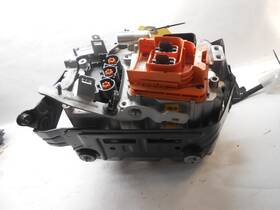
( Brand: Bmw ), ( Manufacturer Part Number: 12365A043E4 ), ( Part Type: Inverter ), ( Loc: 999 )
Review BMW G20 Hybrid High Voltage Inverter Oem 12365a043e4/ 5a043e4
The **BMW 12365A043E4 (G20) 330e High Voltage Inverter** is a critical component of the plug-in hybrid powertrain found in the BMW 330e (F40/F43) generation, designed to seamlessly integrate the electric motor with the internal combustion engine while optimizing energy efficiency and performance. This high-voltage inverter, part of the broader **5A043E4** and **FA0325** component families, serves as the electrical interface between the battery system and the electric motor, converting direct current (DC) from the high-voltage lithium-ion battery pack into alternating current (AC) to drive the three-phase induction motor. Engineered with precision, it incorporates advanced silicon carbide (SiC) MOSFET technology, which enhances switching efficiency, reduces losses, and improves thermal management compared to traditional silicon-based inverters. This innovation allows for faster response times, smoother acceleration, and extended electric-only range, making the 330e a compelling choice for drivers seeking a balance between electrification and traditional driving dynamics.
The **12365A043E4** inverter is built to withstand the rigorous demands of BMW s hybrid system, featuring robust insulation and cooling mechanisms to prevent overheating during high-power demands, such as rapid acceleration or regenerative braking. It operates within a high-voltage range (typically 150 400 volts) and is integrated into the vehicle s iDrive and hybrid control systems, allowing real-time adjustments to power distribution between the electric motor and the gasoline engine. The unit is also equipped with built-in diagnostics and fault detection capabilities, ensuring reliability and alerting the driver or technician to potential issues before they escalate. Compatible with BMW s **G20** platform (used in the 330e and other hybrid models), this inverter is a key enabler of the vehicle s **eDrive** system, which maximizes efficiency by prioritizing electric propulsion at lower speeds and seamlessly transitioning to hybrid mode when necessary.
For maintenance and replacement purposes, the **12365A043E4** inverter is a high-demand OEM part, often sought after by BMW dealerships and independent hybrid specialists for repairs or upgrades. Its unique **5A043E4** and **FA0325** designations indicate specific variants that may differ slightly in software calibration or mechanical mounting, ensuring compatibility with the vehicle s electrical architecture. When servicing or replacing this component, it is essential to follow BMW s strict electrical safety protocols, as high-voltage systems pose significant risks if mishandled. Proper recalibration of the inverter and hybrid system post-installation is also necessary to restore optimal performance and prevent error codes from appearing on the instrument cluster. Whether as an original equipment part or a high-quality aftermarket alternative, the **12365A043E4** inverter remains a cornerstone of the 330e s hybrid efficiency, blending cutting-edge technology with BMW s signature driving experience.
### **Pros and Cons of Buying a BMW 330e (G20) Plug-in Hybrid (PHEV)**
#### **Overview**
The BMW 330e (G20) is a plug-in hybrid version of the BMW 3 Series, combining an electric motor (up to 125 kW / 168 hp) with a 2.0L turbocharged four-cylinder gasoline engine (255 hp). It features a high-voltage battery (13.5 kWh) and a high-voltage inverter (part number **12365A043E4**), which manages power flow between the electric and internal combustion engine (ICE) systems. This model offers a blend of electric driving range, performance, and luxury, but like any vehicle, it has trade-offs.
---
### **Pros**
1. **Electric Driving Range**
- The 330e provides **30 40 miles (48 64 km) of all-electric range** (WLTP), sufficient for daily commutes or short trips without using the gasoline engine. This reduces fuel consumption and emissions for short-distance driving.
2. **Fuel Efficiency**
- Combined fuel economy is **100 110 MPG (combined, depending on driving style)**, making it one of the most efficient BMWs in its class. This translates to lower operating costs compared to a full ICE or even a non-plug-in hybrid.
3. **Performance and Driving Experience**
- The **330e delivers strong acceleration** (0 60 mph in 5.5 seconds) thanks to the combined power of the electric motor and gasoline engine. The electric motor provides instant torque, enhancing responsiveness.
- BMW s **iDrive infotainment system** and **driving modes** (e.g., Eco Pro, Sport) offer a premium experience, though the software can be clunky at times.
- The **G20 chassis** improves over the older G21/G22 models with better handling, suspension tuning, and reduced body flex.
4. **Luxury and Comfort**
- As a BMW, the 330e retains the brand s reputation for **high-quality materials, refined interior, and advanced driver aids** (e.g., adaptive cruise control, lane-keeping assist, 360-degree camera).
- Available **M Sport and xDrive** packages enhance performance and off-road capability.
5. **Tax Incentives and Lower Operating Costs**
- In many regions, PHEVs qualify for **tax credits, lower registration fees, or access to HOV lanes**, reducing ownership costs.
- Electric-only driving means **no oil changes, fewer brake replacements** (regenerative braking extends brake life), and quieter cabin during EV use.
6. **Versatility**
- Unlike a full EV, the 330e can **always be driven** without worrying about charging infrastructure. The gasoline engine ensures long-distance capability ( 400 450 miles total range).
7. **Resale Value**
- BMW hybrids, especially newer G20 models, hold their value relatively well due to demand for efficient, premium vehicles.
---
### **Cons**
1. **High Purchase Price**
- The 330e is **more expensive than a comparable non-hybrid 3 Series** (e.g., 330i) due to the added cost of the electric drivetrain, battery, and hybrid components. Expect to pay **$45,000 $55,000 ** depending on trim and options.
2. **Complexity and Maintenance Costs**
- Hybrid systems are **more complex than ICE vehicles**, leading to higher repair costs if issues arise (e.g., high-voltage inverter failures, battery degradation, or software glitches).
- The **high-voltage inverter (12365A043E4)** is a critical component; if it fails, repairs can be costly (BMW may charge **$1,000 $2,500 ** for replacement or labor).
- Battery degradation over time may reduce electric range, though BMW offers **8-year/100,000-mile battery warranty** (limited).
3. **Charging Infrastructure Limitations**
- While the 330e can be charged at home (Level 1 or Level 2), **public charging stations may not always be available**, especially on road trips. Fast charging (DCFC) is slower than in full EVs (e.g., 30 minutes for 20 30 miles of range).
- Charging cables and adapters can be **bulky and inconvenient** compared to plugging in a full EV.
4. **Reduced Gasoline-Only Range**
- The **gasoline engine s efficiency drops when the electric motor isn t assisting**, meaning long highway drives may consume more fuel than expected. The **total range ( 400 450 miles)** is decent but not exceptional for a luxury sedan.
5. **Weight and Handling Trade-offs**
- The **battery and hybrid components add significant weight** ( 500 600 lbs), which can make the 330e feel **less nimble** than a lighter 3 Series sedan (e.g., 320i).
- The **G20 s suspension is tuned for comfort over sportiness**, so enthusiasts may find it less engaging than a manual or lower-slung BMW.
6. **Software and Connectivity Issues**
- BMW s **iDrive system** has been criticized for **lag, glitches, and outdated software** in some models. Updates can be slow, and navigation may not always be accurate.
- **Bluetooth connectivity and Apple CarPlay/Android Auto** are available but can be finicky.
7. **Depreciation Risk**
- While BMW hybrids hold value better than some EVs, **PHEVs still depreciate faster than non-hybrid luxury cars**. If you plan to keep the car long-term, this may not be a major concern, but resale value could be lower than expected.
8. **Limited Electric-Only Practicality**
- The **30 40 miles of electric range is sufficient for commuting but insufficient for long EV-only trips**. If you rely heavily on electric driving, a full EV (e.g., BMW i4) or a larger PHEV (e.g., 530e) may be more practical.
9. **Environmental Concerns**
- While PHEVs reduce emissions for short trips, **the gasoline engine still contributes to pollution** when driven long distances. If sustainability is a priority, a full EV or plug-in hybrid with a larger battery may be better.
10. **Potential for Hybrid-Specific Problems**
- Issues like **high-voltage wiring failures, inverter malfunctions, or battery cooling system problems** can arise over time. BMW s hybrid systems are improving, but they are still less proven than traditional ICE or EV drivetrains.
---
### **Ending Conclusion**
The **BMW 330e (G20) is an excellent choice for drivers who want a **premium, efficient, and capable plug-in hybrid** without sacrificing BMW s signature luxury and performance**. It excels in **urban driving, fuel savings, and daily usability**, making it ideal for commuters or those who frequently drive short distances. However, it is **not the best option** for those prioritizing **long electric range, minimal maintenance costs, or off-road capability**.
If you **charge regularly, drive mostly in the city, and value BMW s driving dynamics**, the 330e is a strong contender. But if you **need a vehicle for long highway trips, want lower long-term costs, or prefer a simpler drivetrain**, a **non-hybrid 3 Series, a full EV, or a larger PHEV** might be better.
---
### **Recommendation**
**Buy the BMW 330e (G20) if:**- You **charge your car daily** (home or work) and drive **mostly short distances** (under 30 40 miles per day).
- You **value BMW s luxury, performance, and driving experience** over pure electric range.
- You **want to minimize fuel costs** and reduce emissions for daily use.
- You **don t mind higher maintenance costs** associated with hybrid systems.
**Avoid the BMW 330e (G20) if:**- You **rarely charge the car** and mostly rely on the gasoline engine.
- You **drive long distances frequently** (highway trips over 100 miles).
- You **prioritize lower operating costs** or **minimalist maintenance**.
- You **prefer a full EV** (e.g., BMW i4) for sustainability and efficiency.
- You **find BMW s software or hybrid reliability concerns** to be dealbreakers.
**Alternatives to Consider:**- **BMW 330i (G20)** Pure gasoline performance without hybrid complexity.
- **BMW i4 (xDrive40)** Full EV with better long-range efficiency if you charge regularly.
- **Tesla Model 3 Long Range** More affordable, better software, and longer electric range.
- **Toyota RAV4 Prime** If you want a **larger PHEV with better electric range** and lower cost.
- **Hyundai Tucson PHEV** A **more practical hybrid SUV** with strong efficiency.
For most buyers, the **330e strikes a good balance
Details:
BMW G20, 330E Hybrid High voltage Inverter OEM 12365A043E4 / 5A043E4 FA0325.
part #: 12365a043e4 prices
- $799.99-$2200.00
specifications powerinverteca:
- brand: Bmw
- mpn: 12365a043e4
- part type: Inverter
- loc: 999
seller powerinverteca:
- rating: 99.9%
- # reviews: 11561
- city: Monroe, Georgia
payments powerinverteca:
- other
- wallet: Apple-pay
- credit card: Visa
returns powerinverteca:
- paid by: Seller
- time: 30 Days
- policy: Returns Accepted
- method: Money back
offer powerinverteca:
- sold: 0
- started: February 23, 2026
- best offers: True
- quantity: 1
- options: Ship-to-home
- availability: In Stock
general powerinverteca:
- condition: Used
- Vehicle Electronics GPS > Car Electronics Accessories > Power Inverters
shipping powerinverteca:
- service: UPS Ground
- type: Fixed
- transit: 3-8 Days
- class: Standard
- carrier: UPS
- cost: $0.00
Bmw 12365A043E4 Is Similar To:
- Bmw 8678851-02 2017 Bmwx5 Hybrid Power Charger Inverter Converter Phev Module 6144867885102 Oem (40% similar) Please verify that it fits and is compatible with your specific model before purchasing. All parts including engines, transmissions, transfer cases, differentials, batteries come with a 30 day warranty. This is an item that has been previously used. Note: item may require programming/unlock code...(October 30th, 2025)
- Bmw 8647316-01 2014 I3 Converter Inverter Ah Hybrid Electric 6144 Oem (36.4% similar) Fits the following: 2014 Bmw I3, 30 day warranty!, loc W1D04A SK 1R0011 I3...(March 18th, 2026)